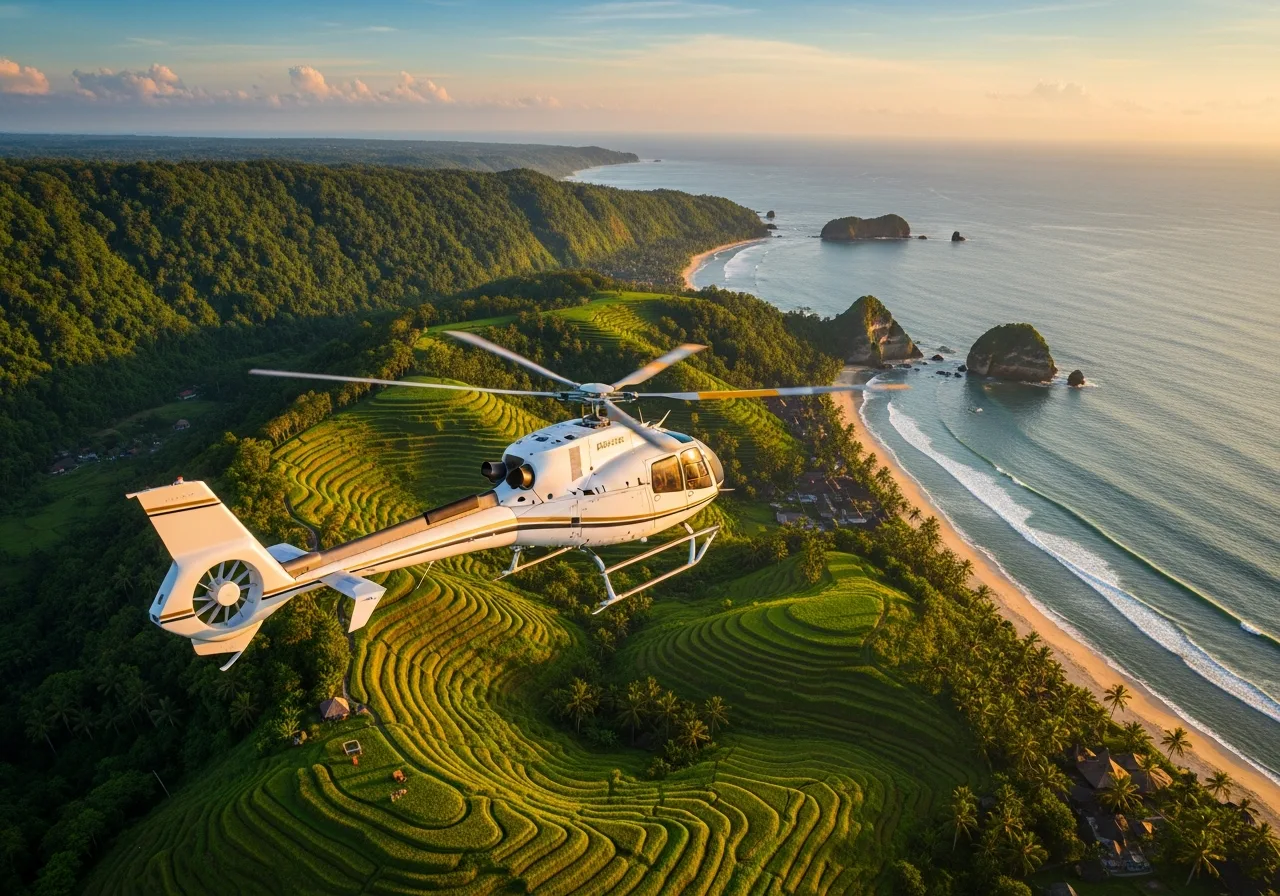
In 2027, Sumba helicopter tour operations continue to serve a small, luxury niche within Indonesia’s growing helicopter market. This segment is driven by discerning travellers seeking premium experiences and convenient access to Sumba, with Bali remaining the primary demand for these high-value charter services.
Sumba Helicopter Tour Eco-Tourism 2027: Sustainable Practices
For 2027, the focus on sustainable practices within the luxury aviation sector, particularly for Sumba helicopter tour operations, aligns with global trends in experiential travel. While specific Sumba-dedicated eco-tourism standards for helicopter charters are not publicly codified, operators in this premium niche are increasingly adopting measures reflecting broader environmental stewardship within the aviation industry.
The global helicopter tourism market was valued at approximately USD 760.7 million in 2025, projected to reach USD 789.6 million in 2026, and USD 1,064.1 million by 2034, indicating a 3.8% Compound Annual Growth Rate (CAGR) over this period. Another industry estimate places the market at USD 1.08 billion in 2025 and USD 1.44 billion by 2033, with a 3.63% CAGR from 2026–2033. For Indonesia, the helicopter market was estimated at USD 329 million in 2025 and is projected to reach USD 435 million by 2032, implying a 4.1% CAGR from 2026 onward. These figures suggest steady low- to mid-single-digit growth in helicopter tourism demand for 2026–2027, driven by luxury leisure, experiential travel, and premium charter use.
Operational Efficiencies and Fuel Management
Sustainable practices in helicopter operations begin with fundamental efficiencies. Modern helicopters incorporate designs that improve fuel efficiency and reduce emissions compared to older models. Operators committed to sustainable practices prioritise the use of newer aircraft or regularly upgraded fleets. This extends to meticulous flight planning to minimise flight times and optimise routes, directly reducing fuel consumption and associated emissions.
- Route Optimisation: Utilising direct flight paths and avoiding unnecessary detours.
- Weight Management: Ensuring aircraft are not excessively loaded, as heavier aircraft consume more fuel.
- Engine Maintenance: Regular and thorough engine maintenance to ensure optimal performance and fuel efficiency.
- Aerodynamic Improvements: Employing aircraft with improved aerodynamic profiles.
Noise Reduction Strategies
Helicopter noise can impact local communities and wildlife. Sustainable operators implement strategies to mitigate noise pollution, particularly when operating in sensitive areas such as Sumba’s pristine landscapes. This includes adhering to designated flight corridors, maintaining appropriate altitudes, and, where possible, utilising helicopters designed with quieter rotor systems.
Pilots are trained to execute quieter flight profiles, especially during take-off and landing, which are typically the loudest phases of a flight. Communication with local communities regarding flight schedules and noise management plans can also be part of a comprehensive approach to minimising disturbance.
Waste Management and Resource Conservation
On-board and ground operations generate waste. Sustainable practices involve rigorous waste management protocols, including recycling and proper disposal of all materials. This extends to the use of eco-friendly cleaning products for aircraft and facilities, and conservation of resources such as water and electricity at operational bases.
For Sumba helicopter tours, the emphasis is also on ensuring that any waste generated during transfers or excursions is responsibly managed and not left in the natural environment. This includes providing clear guidelines to passengers regarding waste disposal.
Community Engagement and Economic Contribution
A core aspect of eco-tourism is the positive impact on local communities. While direct helicopter tour operations may have a smaller footprint compared to larger tourism segments, responsible operators contribute by employing local staff, sourcing local provisions where feasible, and supporting local businesses. This ensures that the economic benefits of luxury tourism are shared with the communities in Sumba.
Operators may also engage in philanthropic initiatives or support local conservation projects, contributing to the long-term well-being of the region. This indirect contribution is a vital component of sustainable tourism.
2027 Note:
For 2027, all Sumba helicopter tour operators are expected to demonstrate clear adherence to the latest Indonesian aviation safety regulations, which implicitly support sustainable operations through efficient flight management and well-maintained aircraft. This ensures operational integrity and minimises environmental impact through reliable performance.
Regulatory Compliance and Safety Standards
Adherence to stringent national and international aviation regulations is fundamental to sustainable operations. This ensures not only passenger safety but also operational integrity, which includes environmental considerations. Regular aircraft inspections, pilot training, and operational audits are integral to maintaining these standards.
The emphasis on safety and regulatory compliance means that aircraft are maintained to optimal performance levels, which often correlates with better fuel efficiency and reduced environmental impact. Any deviations from standard operating procedures are rigorously addressed to prevent incidents and minimise potential environmental harm.
Typical Price Ranges for Sumba Helicopter Tours
Publicly listed pricing for Indonesian helicopter tours is not widely available, but a Bali helicopter tour listing shows a 40–55 minute private group experience starting from USD 4,190, discounted to USD 3,352. This provides a benchmark for premium Bali-area helicopter sightseeing of approximately USD 3,300–4,200+ per aircraft or package for short private scenic flights.
For Sumba, the available public information primarily indicates premium-transfer positioning rather than mass-market sightseeing. NIHI Sumba has promoted helicopter transfers from Tambolaka Airport to the resort in 18 minutes, positioning the product as an ultra-premium convenience service. While Sumba-specific price cards are not publicly standardised, the nature of these transfers suggests a premium cost reflecting the exclusivity and convenience.
| Service Type | Approximate Duration | Estimated Price Range (USD) | Notes |
|---|---|---|---|
| Bali Scenic Flight (Private Charter) | 40-55 minutes | 3,300 – 4,200+ | Per aircraft/package, benchmark for premium sightseeing. |
| Sumba Resort Transfer (Private Charter) | Approx. 18 minutes | Variable, Premium | From Tambolaka Airport to NIHI Sumba, ultra-premium convenience. |
These figures illustrate that Sumba helicopter tours operate within a luxury segment, where pricing reflects the bespoke nature of the service, the operational costs of high-end aviation, and the exclusivity of the destination.
Future Outlook for Sustainable Sumba Helicopter Tours
The future of Sumba helicopter tours is intrinsically linked to the broader growth of the Indonesian helicopter market, which projects a 4.1% CAGR from 2026 onward. As a small luxury niche, Sumba will continue to attract high-value travellers seeking unique experiences. The drive for sustainability will likely lead to further adoption of advanced technologies and operational practices.
This includes the potential for future integration of Sustainable Aviation Fuels (SAF), though widespread availability and cost-effectiveness for smaller operators remain a challenge. However, ongoing research and development in aviation technology suggest a continued trend towards more environmentally conscious operations.
Operators will likely continue to focus on maintaining modern fleets, optimising flight paths, and contributing positively to local communities, ensuring that Sumba remains a desirable destination accessible through responsible luxury air travel. The demand for experiential travel, coupled with a growing awareness of environmental impact, will shape the evolution of these services.
For those considering a Sumba helicopter tour, understanding these operational commitments provides assurance regarding the quality and responsibility of the service. These practices are integral to preserving the natural beauty of Sumba for future generations of travellers.
To discuss your specific Sumba helicopter tour requirements and receive a tailored itinerary, please request a charter quote on WhatsApp.